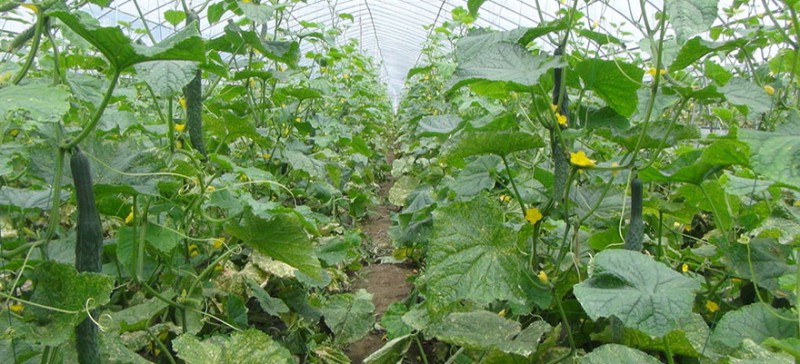
1、 Cucumber Planting Technology
1. Seed selection
There are many varieties of cucumber, such as common, fruit and rootstock. Among them, rootstocks need to be cultivated by grafting. Varieties can be selected in the seed bank, and the specific selection must be combined with climate, terrain and other aspects.
2. Planting and seedling raising
Cucumber is suitable for growing in a warm environment, so the sowing time of spring stubble is generally from the first ten days to the middle of February, and the sowing time of winter stubble is from September to October. If you choose to plant in a greenhouse, you should choose varieties that are resistant to cold and weak light. When cucumber is easy to grow, but its regeneration ability is poor, so we should be careful when planting cucumber to ensure its healthy growth. Seedling raising shall be carried out before sowing. Cucumber seeds shall be scalded in hot water to germinate quickly. After germination, the plant spacing and row spacing shall be determined. Generally speaking, three to five seeds can be seen in each cave. When the cucumber has three or four leaves, the seedling can be fixed.
3. Fertilization and colonization
Cucumber is a shallow root plant, so the air permeability must be ensured when planting. Six days before planting, some chemicals need to be sprayed to strengthen the effective monitoring of temperature. It is best to ensure about 13 degrees Celsius, which can be customized after five days.
4. Field management
According to the terrain requirements of cucumber, we must choose flat land for planting, so as to ensure the normal growth of cucumber. Organic fertilizer or potassium sulfate fertilizer needs to be applied.
2、 Pest control
Cucumber is likely to be threatened by diseases and pests in the planting process. Therefore, in the planting process, we should pay attention to the prevention and control measures of acute pests and strengthen management, so as to ensure the yield and quality of cucumber.
1. Downy mildew control
Downy mildew is a common hazard. Generally speaking, it mainly occurs in the early growth stage of cucumber. The bacteria will slowly spread from the leaves and eventually become black molds. Therefore, when planting and selecting seeds, we should carry out certain experiments on the seeds and select excellent varieties. In the process of sowing, we should also pay attention to scientific planting, proper fertilization and reduce the use of nitrogen fertilizer. once the disease is found, the leaves can be sprayed with pesticides at a frequency of about eight days.
2. Powdery mildew control
Powdery mildew is also a disease, which mainly does great harm to the leaf surface of cucumber. If it is serious, it will also cause some damage to the stem of the plant, and eventually lead to the death of the cucumber plant. Therefore, when planting, we should not only select excellent varieties, but also strictly manage the temperature and humidity of the field, strengthen ventilation and deal with diseased plants in time. It can be sprayed with 550 times of chlorothalonil at 75% concentration.
3. Fusarium wilt control
Fusarium wilt mainly occurs in the later stage of cucumber growth, generally manifested as leaf wilt, brown cracks on the stem and red molds on the plant. In serious cases, the plant will dry up and die. Usually, the cause of Fusarium wilt is that the soil humidity is too high. Therefore, when planting cucumber plants, strict field management should be carried out and attention should be paid to drainage. It should be noted that it is not allowed to plant again within three years.
4. Prevention and treatment of target spot disease
In recent years, the occurrence of target spot on cucumber plants has become more and more serious, and has become an important disease. The target spot is mainly caused by the mixed infection of fungi and bacteria, which is very difficult to control. Moreover, target spot disease has certain drug resistance, and the disease is difficult to control. Drugs must be used for prevention and treatment. You can use Ximei, qianlv and other drugs. The use method is to strictly control the proportion according to the instructions and spray the cucumber plants properly. Generally speaking, about three times can effectively control the disease.
5. Control of nematodes and thrips
Nematodes and thrips are also common pests. Nematodes are mainly distributed on the surface of cucumber, which will hinder cucumber from absorbing nutrients, seriously affect the growth of cucumber, and lead to withered and yellow leaves in HuangGuo. If they are not treated and controlled in time, they will eventually lead to the death of cucumber plants. For thrips pests, it is mainly red to absorb the nutrition of cucumber stems to maintain survival and reproduction, which will affect the cucumber leaves. There is no way to absorb nutrition normally, and finally there are problems such as coiling or hardening.
For the prevention of these diseases and insect pests, crop rotation can be adopted to avoid the occurrence of parasitic diseases and insect pests to the greatest extent, and hinder the spread of diseases and insect pests from the root. Of course, some drugs can also be used for appropriate control. For example, alfredone can be used with chitin to properly spray cucumber plants, mainly to inhibit diseases and pests. When planting cucumber, there are aphids and other pests, which mainly occur on the back of the leaves. Absorbing the nutrition of the leaves will eventually lead to leaf curl, early wilting and death. In view of this phenomenon, dichlorvos, dimethoate emulsion and other agents can be sprayed appropriately.